



Alex Faccin
Integrated modelling to support a multifunctional management of the network of canals in the city of Padua
Integrated modelling to support a multifunctional management of the network of canals in the city of Padua


Abstract della ricerca
Integrated modelling to support a multifunctional management of the network of canals in the city of Padua
Background nella ricerca
Urban drainage networks are vital systems that blend natural and man-made elements to manage city wastewater and stormwater, aiming to ensure public health and prevent flooding. However, in many older cities, these systems use combined sewers that can overflow during heavy rain, dumping untreated waste and pollutants directly into water bodies. These Combined Sewer Overflows (CSOs) can potentially cause significant ecological damage, such as oxygen depletion and toxic contamination, a problem set to worsen with climate-driven changes in rainfall and drought patterns.
To combat this, mathematical modeling has become an essential strategy, allowing for the "in-silico" testing of management solutions that align with modern environmental regulations. This is particularly relevant for historic cities like Padua, where the management of centuries-old urban canal infrastracture must be carefully managed to protect both its unique cultural heritage and its urban biodiversity from the ongoing threat of water pollution.
Obiettivi della ricerca
The goal of the project is to explore quantitative trade-off solutions in urban river management satisfying both hydraulic safety and environmental quality to support a multifunctional management of urban water systems and foster the valorisation of such environments in terms of ecosystem services provision. Therefore, the project aims at the development of a dynamic model able to simulate and predict both hydraulic and water quality dynamics in the urban canals of Padua under the current conditions and also under different hydrological and hydraulic management scenarios.
Metodi
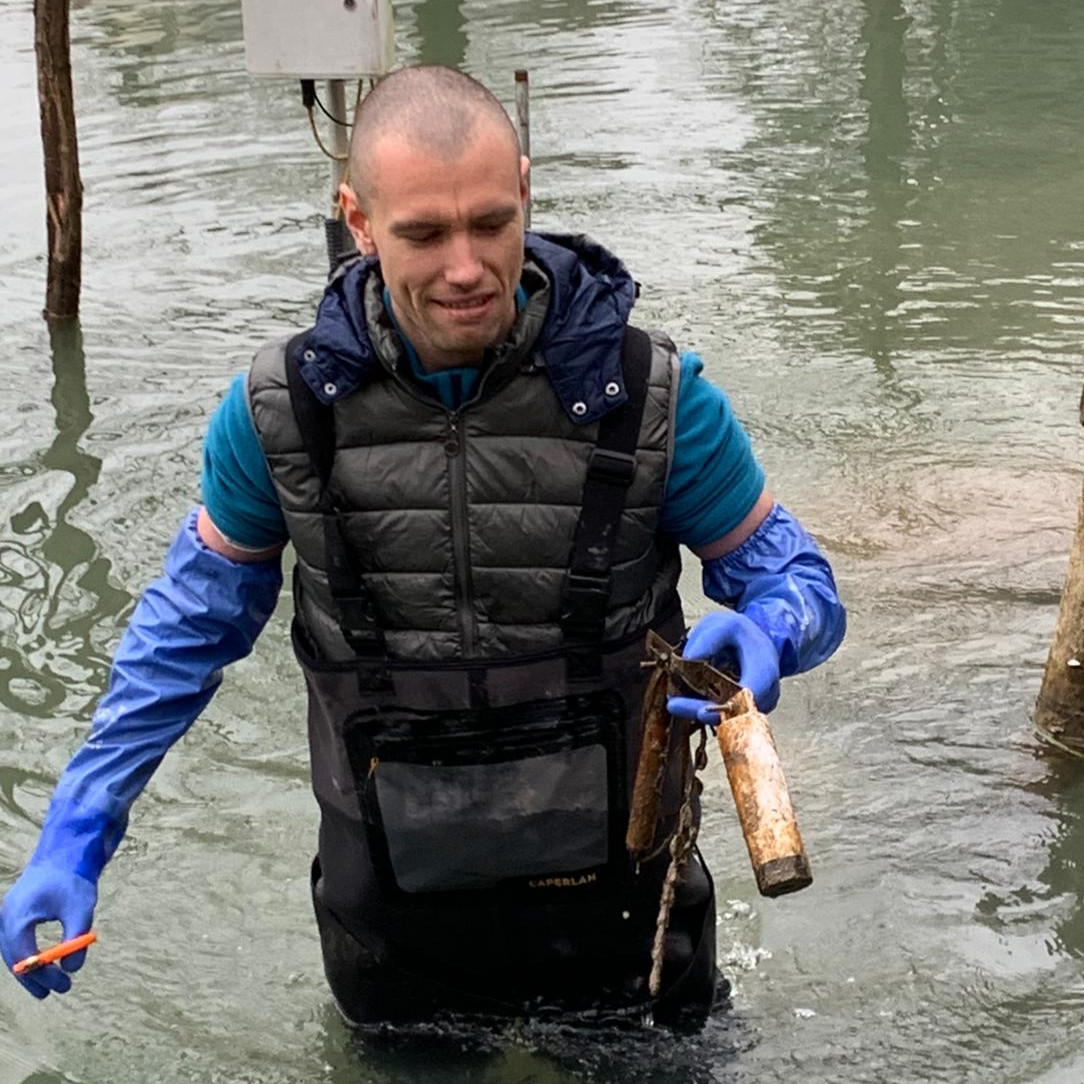
The core of the PhD project involves the gradual development of an integrated model to simulate water levels, flows, and quality indicators within Padua’s canal network. This modeling effort is supported by information exchanges with stakeholders and field monitoring such as hydraulic surveys and water sampling to collect useful data for model calibration and testing.
The final model, once validated on available data, will be used to test different schemes for the management of the network of canals, considering also different climate change and alternative management scenarios. The different scenarios will be assessed and compared in terms of exceedance of hydraulic, environmental and human health safety thresholds.
Risultati
Once the performance of the integrated model has been validated on available data, it will be used to test different schemes for the management of the network of canals, considering also climate change and alternative hydraulic management scenarios.